

-
Share on
-


Summary
- Corrugated boxes use renewable fibers and support high recycling rates, giving you opportunities to keep materials in circulation through closed-loop systems and extend their useful life.
- Stronger packaging laws, corporate commitments, and certifications require you to track recovery rates, recycled content, and life-cycle impacts.
- You can support the circular economy for corrugated packaging by maintaining high recycling and recovery rates, using verified recycled content, and following established standards. These practices can also help you meet regulatory requirements and demonstrate your environmental responsibility.
Single-use packaging has become a symbol of a broader waste problem, creating environmental and reputational challenges for companies. According to Earth Action’s 2026 Plastic Overshoot Day report, short-life plastics such as packaging continue to drive global pollution. The report estimates that nearly 227 million tonnes of plastic waste will be produced worldwide in 2026, with more than 72 million tonnes expected to leak into the environment without proper management.
The old “take-make-dispose” model extracts resources, turns them into products, and discards packaging after a single use. Rising material costs, stronger environmental regulations, and growing public concern are pushing you to rethink this approach.
Corrugated packaging gives you a way to keep materials in use for longer. Renewable fibers make up corrugated packaging, while established recycling networks help recover those materials after use. You can apply circular economy principles to your packaging through recyclable designs and recovered fiber while still meeting your practical packaging requirements.
What Is the Circular Economy in Packaging?
A circular economy keeps products and materials in use for as long as possible and minimizes waste. Instead of following a linear path from raw material to product to disposal, materials move through cycles that give them another use.
Ellen MacArthur Foundation’s Butterfly Diagram illustrates how these cycles work. The model divides material flows into two systems: the biological cycle, which returns renewable materials to nature, and the technical cycle, which keeps manufactured materials in use through reuse, repair, remanufacturing, and recycling.
Follow these packaging design best practices to support a circular economy:
- Keep materials in use. Circular systems prioritize ways to keep products and materials in use for as long as possible before they reach recycling. For packaging, that can include reuse where the application allows it.
- Recover materials after use. When corrugated boxes reach the end of their use, recycling can recover their fiber and return it to the paper-making process for new products.
- Retain material value. Keeping materials in circulation reduces the need for new raw materials and preserves more of the resources already invested in producing them.
- Design for recovery. Packaging design can make the next stage of the material cycle easier by using materials and components that support recycling when the packaging reaches the end of its use.
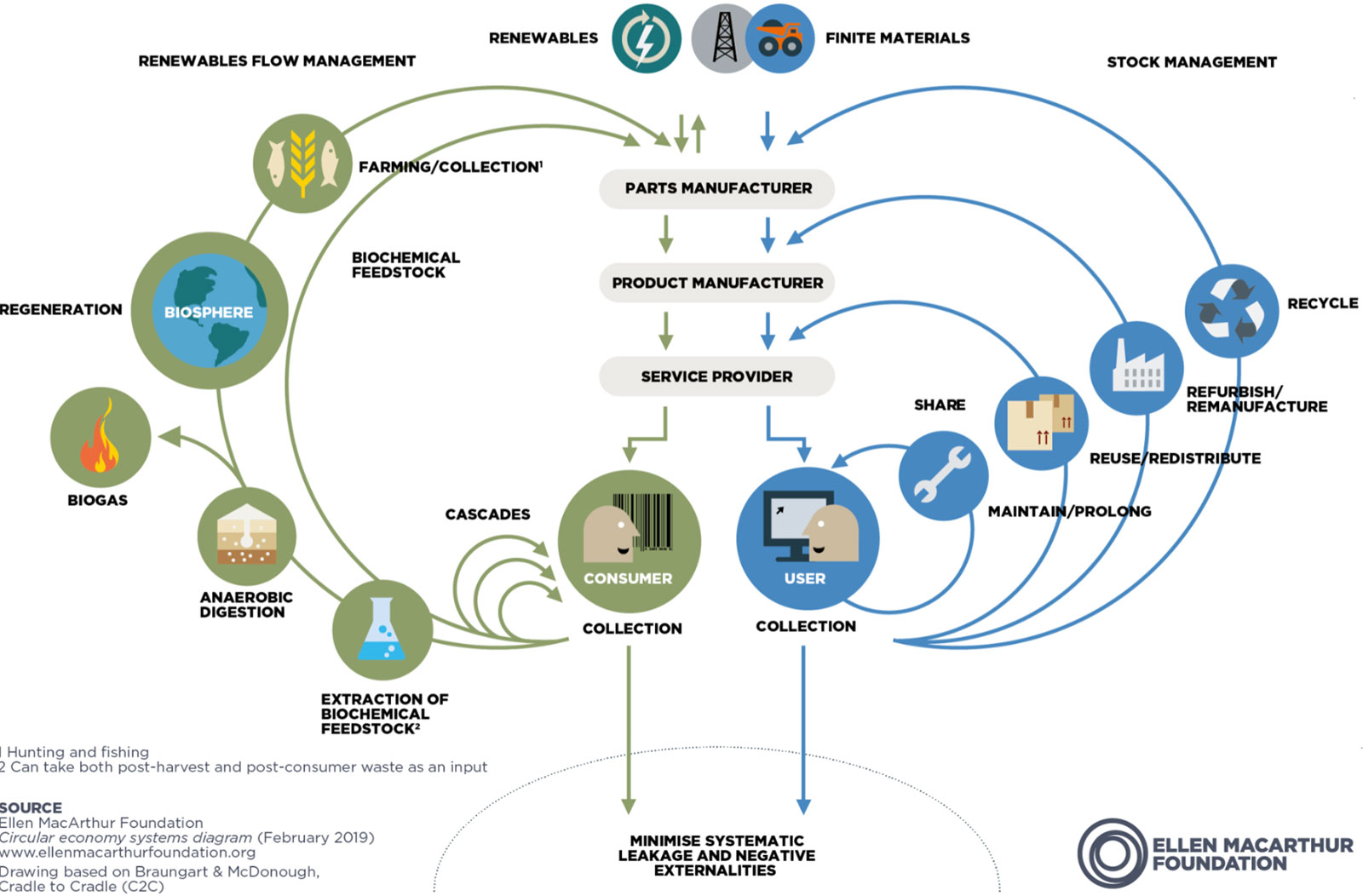
Ellen MacArthur’s Butterfly Diagram
Corrugated packaging has a natural place in a circular economy because its main material, paper fiber, can return to the manufacturing cycle after use. A recovered box can become a source of fiber for new paper, which can then become new corrugated packaging. This allows the same material to support multiple packaging cycles.
At York Container, we approach circularity as part of the larger corrugated packaging cycle. As part of the Atlantic Packaging group, York Container is connected to a vertically integrated business model that uses recovered corrugated material as a raw material for paper production and then converts that paper into new corrugated packaging.
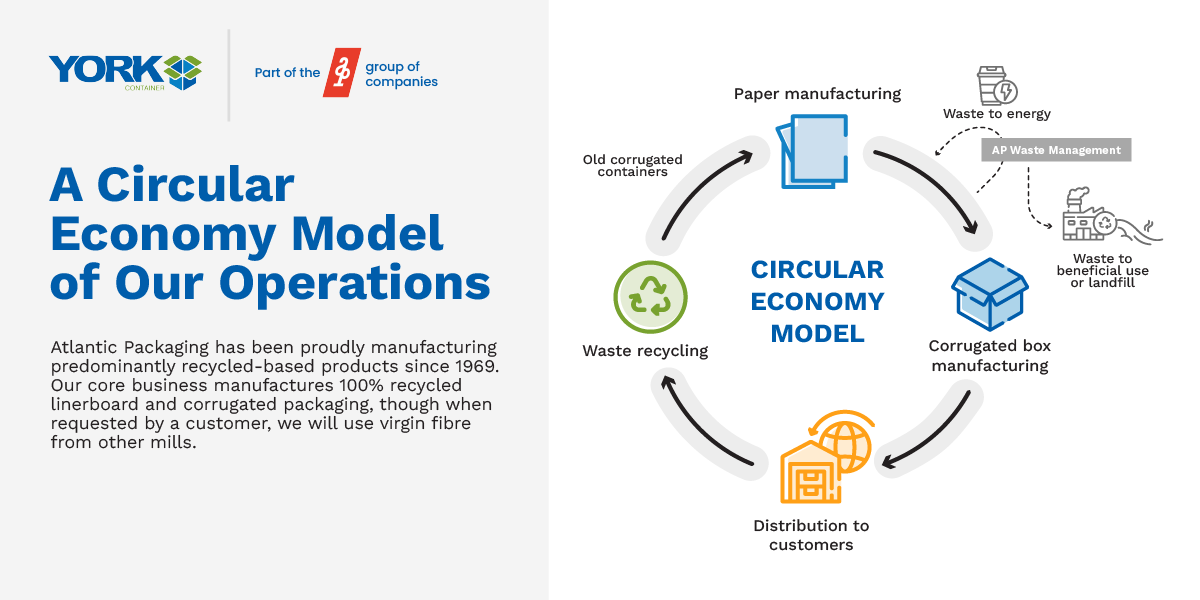
York Container and Atlantic Packaging’s Circular Economy Model
Circularity also changes how you evaluate packaging options. You may need to consider material use, recyclability, sourcing, and waste alongside cost, performance, and product protection.
Several developments are pushing these considerations into packaging decisions:
- States such as California, Maine, Oregon, and Colorado have introduced packaging laws that increase producer responsibility for packaging materials and waste.
- Major US brands have set packaging targets that call for more recyclable, reusable, or lower-impact materials. These commitments can affect the packaging specifications suppliers must meet.
- Consumers are paying closer attention to packaging materials and waste, which can influence how they perceive a product and its brand.
- Programs and standards such as Programme for the Endorsement of Forest Certification (PEFC), How2Recycle, and ISO 14001 give companies established frameworks for responsible sourcing, recycling information, and environmental management. Extended Producer Responsibility (EPR) programs also require businesses to take greater responsibility for the packaging they place on the market, including its collection, recycling, or disposal.
- Billions of packages move through US supply chains each year. At that scale, material choices and end-of-life options can affect resource use and waste.
What’s the Role of Corrugated Packaging in the Circular Economy?
Corrugated packaging provides a strong example of circular design in action. Its renewable fiber base, established recovery systems, and high recycling rates help keep materials in use and support a more circular packaging system. From material sourcing through recovery, you can see how thoughtful design and responsible production help turn everyday packaging into a resource that can be used again.
Renewable and Recycled Fiber Sources
Corrugated boxes are made from fibers sourced from responsibly managed forests and recycled material, allowing them to move easily through closed-loop systems that keep materials in use longer. In the U.S., 70% to 75% of old corrugated containers available for recovery were recycled, with more than 33 million tons of board recycled.
Corrugated Packaging Reuse and Recovery
Many boxes are reused for storage, returns, or reshipping before they are recycled. Each reuse cycle extends fiber life, lowers waste, and strengthens environmental returns.
Packaging Design for Material Efficiency
Sustainable outcomes also depend on design. Right-sized boxes use only the fiber needed, lighter structures cut freight emissions, and limiting inks and coatings makes recycling more efficient.
Corrugated Packaging Reuse and Recycling
You can extend the life of corrugated packaging well beyond its first use. Encourage customers to reuse corrugated packaging where practical, provide clear recycling guidance, or add QR codes with simple reuse and recycling instructions. These are small but useful considerations when you build eco-friendly packaging design into your packaging strategy. They can also help you reduce unnecessary fiber use and keep more of the box’s fiber in circulation after the original shipment.
Metrics for Measuring Corrugated Packaging Circularity
Track a few key metrics to evaluate your corrugated packaging choices, measure progress toward circularity goals, and support corrugated packaging sustainability claims with documented data. These metrics can also help you identify where changes to materials, design, or end-of-life management could improve your packaging strategy.
- Corrugated box recycling and recovery rate. Track how much of your corrugated packaging enters established recycling and recovery streams after use. The data can help you measure progress toward recyclability targets and assess potential EPR-related costs.
- Recycled content percentage. Track the percentage of recycled fiber in your corrugated packaging to verify material specifications and support documented sustainability claims. Supplier data can also help you compare packaging options against your recycled-content requirements.
- Life cycle assessment (LCA) results. Use LCA data to compare the environmental impacts of different packaging options across their life cycles. The results can help you evaluate changes in material use, recycled content, manufacturing, transportation, and end-of-life management.
How York Container Supports the Circular Economy
York Container supports circularity through responsible material sourcing, efficient manufacturing, and packaging design. These practices help us reduce material waste and keep fiber in use through multiple stages of the packaging cycle.
As part of Atlantic Packaging, we use containerboard made from 100% recycled fiber. Recycled fiber reduces demand for virgin materials and keeps recovered material in circulation as it moves from used packaging back into new paper and corrugated products.
We also recycle trim and scrap from manufacturing back into production.
- Our facilities incorporate energy efficiency, waste diversion, and process improvements into day-to-day operations to reduce material and resource use.
- Our design and engineering teams consider material efficiency and recyclability when developing packaging.
- Right-sized, lightweight structures can reduce fiber use and transportation impacts, while fewer inks and coatings can simplify fiber recovery.
We also test our packaging through ISTA-certified testing to make sure designs can withstand the conditions they will encounter during distribution. Stronger packaging can help prevent product damage and the material waste that follows.
We measure our progress against sustainability goals, which gives us a basis for evaluating our practices and identifying areas for improvement.
Take Action Toward a More Regenerative Packaging Future
All of the talking points in this article just prove that circularity is not a distant goal but a working system that delivers measurable benefits for both business and the environment. Every step, from sourcing recycled fiber to testing performance, reflects a commitment to sustainability that supports your business goals and environmental progress.
As regulations grow stronger and sustainability expectations rise, you can take steps now to improve how your packaging moves through the circular economy. Circular packaging can help you use materials more efficiently, measure your environmental impact, and keep resources in use for longer.
Don’t wait for the future of packaging to arrive. Start building it now. Partner with York Container to design packaging that protects your products, reduces waste, and supports a more circular packaging system.
FAQs About the Circular Economy of Corrugated Packaging
Q. Does recycled fiber affect corrugated box performance?
A. Recycled fiber can affect properties such as strength and stiffness, so the right material specification matters. We evaluate the packaging requirements for each application and select materials and board structures that provide the required performance. Recycled content should support your circularity goals without overlooking the protection your products need during storage and distribution.
Q. What should companies track to measure progress toward circular packaging?
A. Start with metrics you can document and compare over time. Recycled content, corrugated box recovery rates, material use, and LCA results can give you a clearer view of how packaging choices affect resource use and end-of-life recovery. Tracking the same measures over time also makes it easier to assess progress against your packaging and sustainability targets.
Q. What makes corrugated packaging part of a circular economy?
A. Corrugated packaging can move through several stages of the paper and packaging cycle. Recovered boxes provide fiber for new paper products, while recycled fiber can go into new corrugated packaging. Packaging design also matters. Using the right amount of material, limiting unnecessary components, and designing for recovery can help keep more fiber in circulation after the box reaches the end of its first use.