

-
Share on
-


Summary
- A lower unit price does not always mean you’ll spend less on your shipping supplies. Your initial purchase price matters, but your total cost of ownership will also depend on how your supplies perform, how much material they use, and how much labor they require.
- To avoid costly purchasing decisions, compare suppliers based on what you need your industrial shipping supplies to achieve, instead of just what they cost to buy. The lowest quote only wins if your supplies can also support your overall packaging requirements.
- Choose a supplier that can support your operation beyond the first shipment. Consistent material quality, reliable availability, and responsive service are just as important as the quoted price.
Currently reviewing quotes for tape, film, or shipping boxes and deciding which supplier deserves your business? Every supplier will claim to offer the best value in their quote. But the number on the quote only shows part of what your purchasing decision will ultimately cost.
With limited visibility into long-term costs, unit price naturally becomes the easiest metric to rely on. It is easy to measure, easy to compare, and readily available.
But the cost of your industrial shipping supplies does not stop at the invoice.
Based on our experience working with companies across different industries, many additional costs come from inefficiencies that appear after the purchase. The choices you make around packaging design, material selection, and equipment compatibility can influence how much material you’ll need to use, how consistently your packaging lines will operate, and how efficiently your shipping process will run.
So, if you've ever wondered why switching suppliers did not save as much money as you expected, or why your team keeps running into the same packaging problems no matter which vendor you use, this is probably why.
Here are five mistakes procurement and operations teams make when buying industrial shipping supplies, and what to consider instead.
5 Expensive Mistakes Procurement Teams Make When Buying Industrial Shipping Supplies
1. Comparing Suppliers Based Only on Unit Price
There's a saying in the industry that it costs more to use a box than it does to buy a box. The same principle applies to your shipping supplies. Like an iceberg, the purchase price is only the visible portion of your total cost. But the larger impact comes from everything that happens after the material enters your operation.
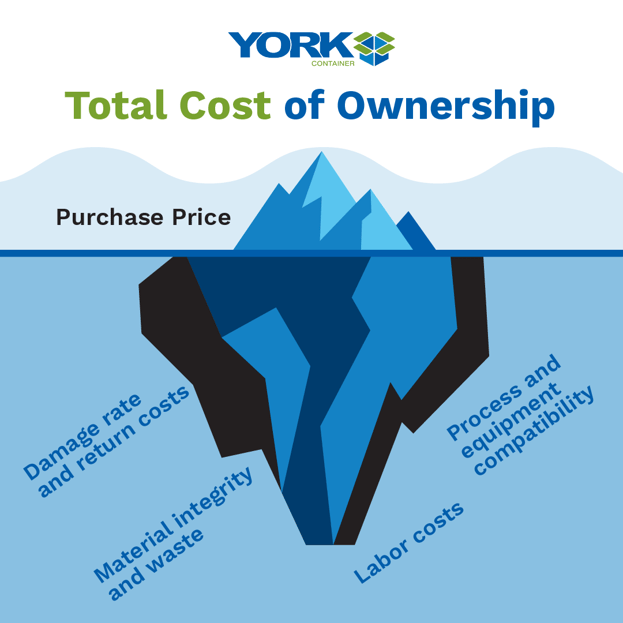
Total Cost of Ownership vs. Hidden Packaging Supply Costs
Before looking at price, understand what your packaging supplies need to deliver.
- Are damaged products becoming a recurring issue?
- Is your team spending extra time cutting, applying, or adjusting packaging materials?
- Are you going through more tape, film, or other supplies than expected?
- Are your current materials performing differently from one batch or application to the next?
Identify the problems you need to address and the goals you want to achieve first. Then evaluate suppliers based on how well they can help you reach those goals alongside their pricing. Otherwise, the supplier with the lowest quote will almost always look like the best option because you're measuring only one variable.
2. Making Supplier Decisions Without Packaging Line Insights
Your people who spend hours packing products every day often have the clearest understanding of which materials will truly support your process and which ones will cause inefficiencies.
They know which tape runs out too quickly, which stretch film tears before a pallet is fully wrapped, and which cartons require extra handling before they are ready to ship. Those issues rarely appear in supplier specifications, but they can affect the consistency of your packaging process over time.
So, before switching suppliers, spend a day on the packaging floor or ask your team what they would change if they could. You may discover that the material with the lowest purchase price creates the most interruptions once it reaches the warehouse.
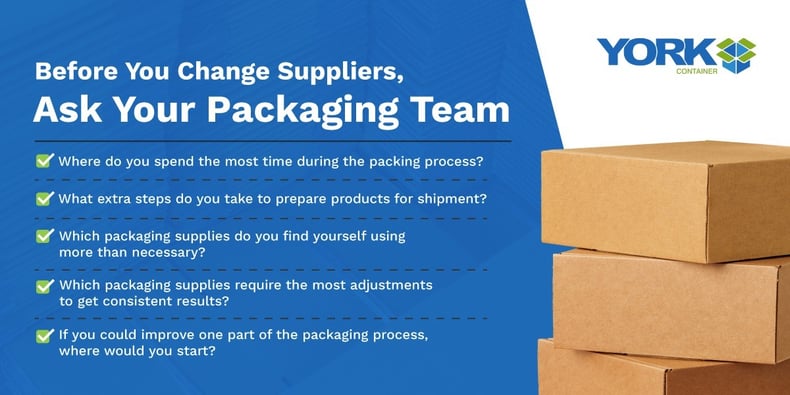
Common Questions to Ask When Reviewing Your Packaging Process
You can also work with a supplier that offers packaging reviews. Packaging companies like York Container can work with your operations teams to evaluate your current packaging processes, review material usage, and identify opportunities to improve performance or reduce unnecessary costs. Our site assessments typically last 1 to 2 days, followed by 4 to 6 weeks of follow-up analysis to compile data, assess ROI, and present findings.
3. Waiting Until After the Purchase to Check Equipment Compatibility
A specification sheet can tell you whether a tape fits your case sealer or a stretch film works with your wrapper. But it cannot tell you how that material will interact with your equipment during a complete production run.
Small differences in adhesive, film tension, or material construction can affect how consistently your equipment performs. For example, a tape that works well in one application may require different settings on another machine, while a stretch film that meets your listed specifications may still require adjustments to provide the stability required for your shipments.
Pro Tip: Test new materials on the same equipment, products, and production conditions you use every day. A successful trial under actual operating conditions provides a much better indicator of long-term performance than supplier specifications alone.
4. Standardizing Beyond What Your Operation Needs
Standardizing your packaging materials can make your purchasing process easier. Fewer SKUs mean fewer items to track, fewer orders to manage, and a simpler process for your team.
But what happens when standardization becomes a restriction? Instead of simplifying the process, you may end up working around the packaging by using more material, making adjustments, or accepting a solution that does not fully fit your product.
Instead, look for opportunities to standardize without losing the flexibility your products require. You may not need a unique packaging solution for every item, but your standards should still leave room for products with different sizes, weights, or shipping needs.
5. Evaluating the First Order Instead of the Next Hundred
Can your potential supplier maintain the same quality from batch to batch? Will they have inventory when your demand increases? How quickly can they respond if a material doesn't perform as expected? A supplier quote may not show these details, but you will notice their impact once the shipping supplies become part of your daily operations.
Before making a decision, look beyond the product itself. Ask about lead times, inventory capacity, quality controls, and how your potential supplier will respond when issues come up or demand changes.
Look Beyond the Purchase Price, Measure the Long-Term Value
Of course, price deserves a place in every purchasing decision. But it should not be the only factor you use to evaluate suppliers.
Whatever industrial shipping supply you choose will eventually become a part of a larger process once it arrives at your facility. It will affect how products are packed, how consistently equipment runs, how much material gets used, and how well products arrive at their destination.
Each of these factors contributes to your total cost of ownership, even if they never appear on the supplier's quote.
The next time you compare suppliers, don't stop at asking who offers the lowest price. Ask which supplier gives you the best outcome for the way your business operates. That answer may be the lowest quote, or it may be a different supplier.
When you look at suppliers through this lens, your decision will become a lot easier, because you're finally measuring what actually affects your bottom line.
At York, we help companies evaluate packaging supplies as part of their entire shipping process, not just as another line item to purchase. Whether that means improving material performance, testing compatibility with existing equipment, or identifying opportunities to reduce waste, we help you choose packaging solutions that support your business long after the materials arrive.
If you're looking for a packaging supplier that can support both your day-to-day needs and your long-term growth, explore York Container's full range of packaging supplies and discover how the right partnership can strengthen your entire packaging process.
Contact our packaging experts today!
Industrial Shipping Supply FAQs
Q: How can we evaluate total industrial shipping supplies beyond unit price?
A: Track indirect metrics alongside purchase orders. You can measure damaged goods claims, labor hours spent on repacking, total material used per pallet, and line stoppage duration. Comparing these metrics before and after switching suppliers gives you a clear view of true financial impact.
Q: What is the safest way to test new materials on existing equipment?
A: Request sample rolls or production batches from your vendor for a trial run. Run these samples on one packaging line during planned maintenance or low-volume shifts. This lets you observe adhesive behavior, machine tension, and seal durability without delaying daily shipment schedules.
Q: How do we prevent quality variation in recurring supplier orders
A: Establish clear material tolerance standards in your service agreement. Ask your vendor for batch test certificates and set up routine audits upon shipment arrival. Working with a packaging supply partner that maintains consistent manufacturing standards helps ensure every reorder matches your initial sample performance.