

-
Share on
-


Summary
- With 227 million tons of plastic waste projected for 2026, more and more companies are looking for ways to reduce the environmental impact of their packaging supplies.
- Sustainability matters, but your packaging still has to do its job. If you change materials, formats, or components to make your packaging more sustainable, consider how those changes will affect performance during packing, storage, distribution, and product protection.
- Before switching to eco-friendly packaging supplies, define what your packaging needs to accomplish, test the proposed change under representative conditions, and measure its effect across your entire packaging system.
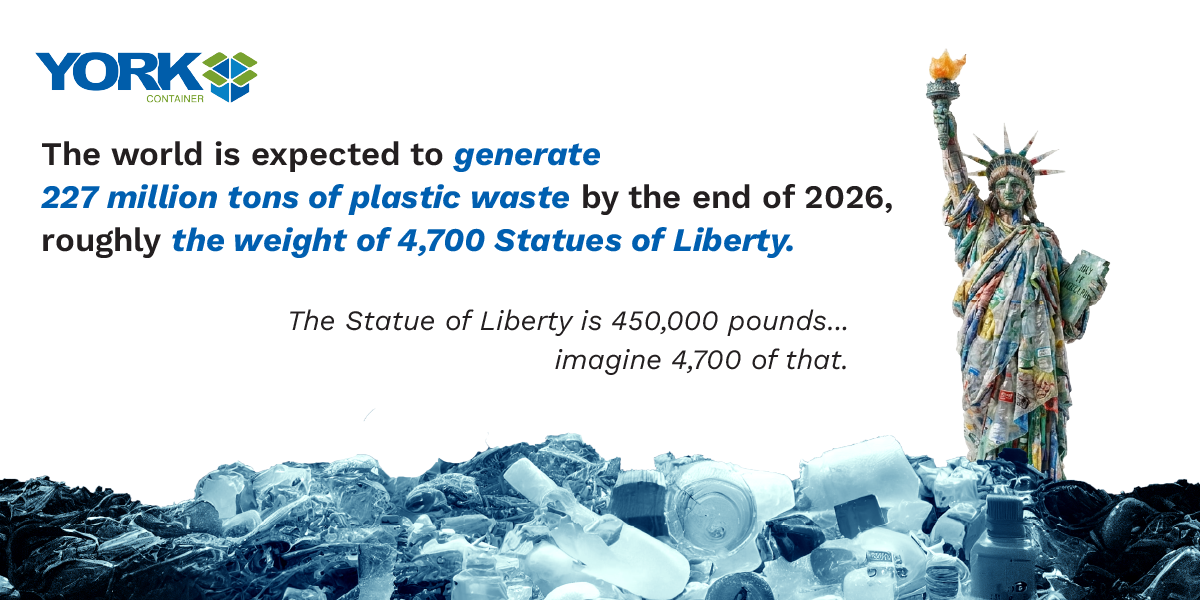
Did you know? The world is projected to generate 227 million tons of plastic waste by the end of 2026. Put into perspective, that is roughly the weight of 4,700 Statues of Liberty in plastic waste!
Nearly 72 million tons of that waste, or about 31.6%, could be mismanaged and end up in nature.
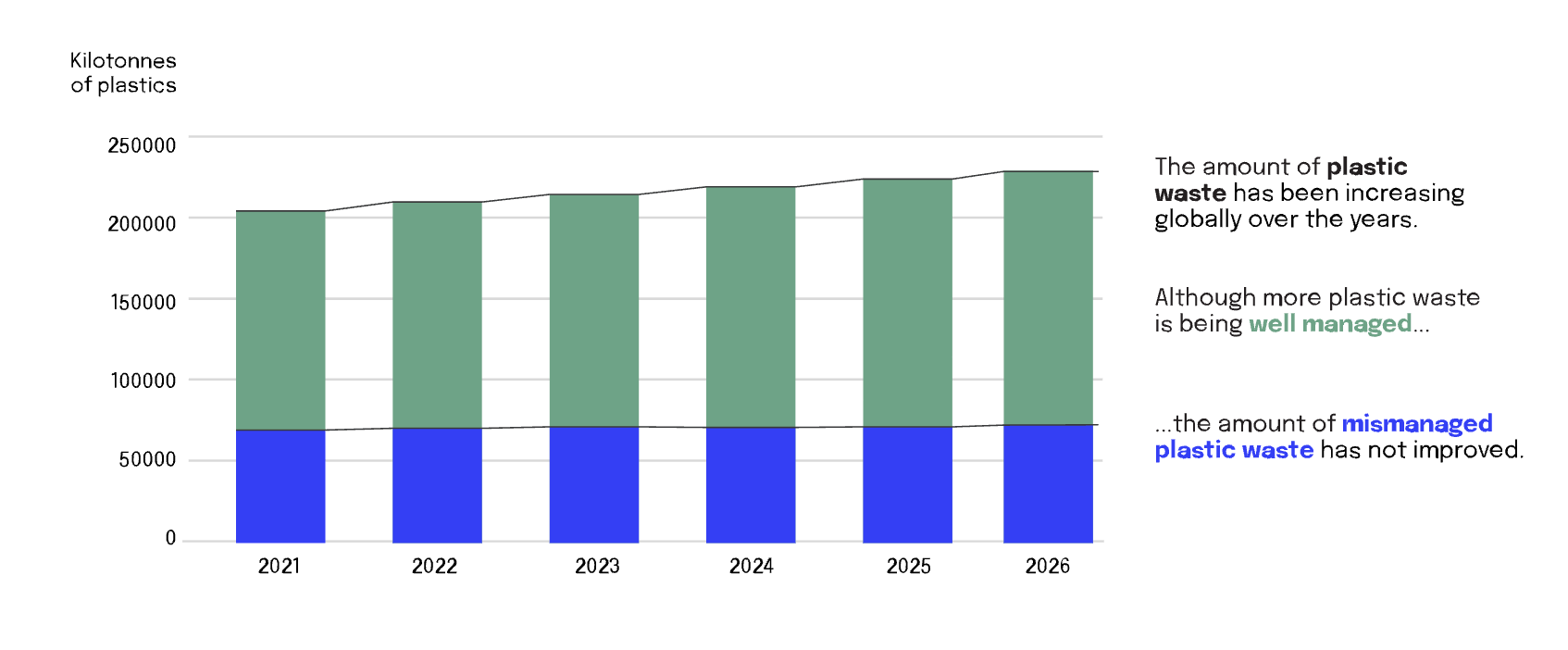
Courtesy: Plastic Overshoot
With numbers like these, along with growing pressure from consumers and government to switch to more eco-friendly packaging supplies, it makes sense that consumers and companies are looking more closely at the supplies they purchase and use.
But switching to a material that appears more sustainable does not automatically make it a better packaging supply. Everything you use inside and around your brown box still needs to perform its intended function. It should also fit seamlessly into how your team works and continue to perform under the conditions it will face throughout distribution and end of use.
That’s why at York Container, we approach packaging with Perform, Promote, Protect™ in mind, considering sustainability alongside the performance, protection, and business requirements your packaging supplies need to meet.
Before you switch to a different supplier, look at what the change could mean for your complete packaging system.
That said, let’s get to the point.
Using Eco-Friendly Materials Alone Doesn’t Make Your Packaging Supplies Sustainable
No matter how “sustainable” they may seem in a quotation document.
There is value in looking closely at the material itself. After all, the material you choose directly affects your packaging's environmental profile. But choosing an eco-friendly packaging supply doesn’t necessarily make it the most sustainable solution for your packaging requirements.
When you evaluate a material change, you also need to consider what that change means for the packaging you already have in place.
If the new supply cannot provide the same protection as your current material, you may need to use more of it or change other parts of your packaging to achieve the same result. This can ultimately increase your material use and affect how your packaging performs during packing, storage, distribution, and product protection.
York Container believes that packaging supplies should be evaluated as part of the complete packaging system.
- Material use. Can you reduce packaging supply without affecting the packaging’s required performance?
- Product protection. If you replace the existing material with the new material, will it continue to protect the product through handling and distribution?
- Production. Can you use the material or design within your existing production processes?
- Transportation. Will changes to weight, dimensions, or configuration affect your distribution?
- End of use. Can the packaging enter the recovery process available in your market?
How to Make Sustainable Packaging Changes Without Sacrificing Performance
Establish What Your Packaging Needs to Accomplish
Before you look at different materials or designs, establish what your packaging needs to handle. How heavy or fragile is your product? Will it need to withstand stacking? What kind of handling will it go through? What conditions will it face during storage? How will you handle it during distribution? What equipment will your packaging supply need to work with?
Then map those requirements to each packaging supplier's role to understand what each one needs to deliver within your complete packaging system.
Test Sustainability Changes Against Your Performance Requirements
Bringing more eco-friendly packaging supplies into your packaging system is a good step. But to get the most value from those changes, make sure they still meet your packaging performance requirements.
Could a change in your tape affect your seal strength during handling? Could a different cushioning material increase product damage? Could replacing your void fill affect how well products are protected during distribution?
|
Performance Factor |
Evaluation Criteria |
|
Product Weight |
Required load-bearing capacity |
|
Stacking Requirements |
Required compression strength under stacking conditions |
|
Handling Environment |
Resistance to expected handling and impact conditions |
|
Storage Conditions |
Performance under applicable temperature and moisture conditions |
|
Distribution Cycle |
Protection requirements across the distribution cycle |
|
Equipment |
Compatibility with existing packing and handling equipment |
Use your current specifications and test results as a baseline. If the proposed material change still performs well enough for your application, you have a stronger basis for adopting it. If it does not, identify what needs to improve and determine whether you can adjust the material or packaging configuration.
Identify Opportunities to Improve Your Complete Packaging System
- Can you reduce your material use? Could you use a lighter-gauge, thinner, or smaller-format supply while still meeting your required performance specifications?
- Can you change the material? Could a supply with recycled content or a different material meet the same requirements for your application?
- Can you eliminate a component? Does the supply provide a function your packaging actually needs? Could you remove it without affecting protection, closure, handling, or other requirements?
- Can you reduce over-specification? Are you using a supply with properties beyond what your product, distribution environment, or equipment requires?
- Can you reduce waste during packing? Are your application methods, cutting, setup, or equipment settings causing unnecessary material use or scrap?
- Can you improve material recovery? Can your materials and components move through the recycling or recovery systems available where your packaging is distributed?
Sustainability Requires a Complete Packaging Perspective
As this article establishes, if you change elements of your packaging to pursue sustainability, evaluate those changes against the performance, production, distribution, and end-of-use requirements of your complete packaging system.
Some changes can reduce your material use or improve your material recovery without affecting other requirements. Others may require packaging design or specification adjustments to maintain the required level of protection and performance.
In some cases, the better solution may involve adjusting how your packaging supplies work together rather than simply replacing one material or supply with another.
If you are evaluating sustainability across your broader packaging system, York Container can help you assess your current setup, identify improvement opportunities, and achieve your sustainability objectives while preserving the performance your packaging requires.
- Packaging review. York Container’s Strategic Packaging Optimization Team (SPOT) can review your current packaging setup and identify opportunities to reduce material use, improve productivity, address safety concerns, or improve cost-effectiveness.
- Sustainability beyond the box. Alongside our sustainable corrugated boxes, York Container can help you achieve your sustainability goals by considering the value each material and supply brings to your complete packaging system and how those choices contribute to its overall sustainability.
- Packaging design and manufacturing. If a sustainability change requires a different box design, material specification, or construction, York Container can evaluate the change against your packaging requirements and manufacture everything to those specifications.
Considering a change to your packaging? Contact York Container today to discuss your requirements and explore your options.
Eco-Friendly Packaging Supplies FAQ
Q. What actually makes a packaging supply more sustainable?
A. When you evaluate a packaging supply, look beyond its material profile. You can improve your packaging’s sustainability by using recycled content, reducing material use, or improving recovery potential, but you also need to consider how the supply performs in your application. A supply that looks better from a material standpoint may require other changes to deliver the performance your application actually requires.
Q. How do we know whether a sustainable packaging supply will perform as required?
A. You need to evaluate the supply within the conditions your packaging will actually face. A material may perform well in a controlled test but respond differently when you combine it with your carton, adhesive, equipment, product weight, stacking pattern, or distribution environment. Compare the proposed supply against the requirements that matter for your application, then test the complete setup under representative conditions.
Q. Can we reduce packaging material without affecting performance?
A. You may be able to reduce material use by changing the material thickness, dimensions, format, or application method. You can also find opportunities by looking at how your packaging supplies work together. For example, changing one supply may allow you to use less of another without reducing the protection your product needs. The right approach depends on each supply's function, the product being packaged, and the conditions your packaging will face during storage and distribution.
Q. Should we replace a packaging supply if a more sustainable alternative is available?
A. Not necessarily. Before you switch, evaluate what the alternative changes across your packaging system. A different material may reduce resource use, but it may require changes to equipment settings, packing processes, material quantities, product protection, or distribution setup. Look at those effects together to determine whether the alternative delivers a meaningful improvement for your application.
Q. What should we measure when evaluating a more sustainable packaging supply?
A. Define the specific improvement you want to make before you decide what to measure. You might track material weight, recycled content, waste, recovery potential, shipping weight, or cost, but the useful metrics will vary by application. Then look at what changes alongside those results. For example, a reduction in material weight may have little value if it requires additional material elsewhere in your packaging system.