

-
Share on
-


Summary
- Your packaging decisions can influence how your customers perceive your brand, how efficiently you use materials, and how well your packaging performs in production and distribution.
- Switching to sustainable packaging does not mean that you need to choose your environmental goals over packaging performance. With the right approach, you can address several priorities within the same solution.
- The right packaging approach helps you balance sustainability with your performance, cost, and brand requirements.
Did you know that about 90% of all products in the U.S. are shipped in corrugated boxes? With how common they are, it’s easy to overlook how corrugated packaging contributes to your brand beyond protecting your product.
Modern corrugated graphic packaging is an effective tool for retail marketing. 72% of American consumers agree that packaging design influences their purchasing decisions, while 67% believe that the materials used in creating the packaging matter.
Sustainability has also become an important consideration in corrugated packaging. Research from NYU Stern’s Center for Sustainable Business found that sustainability-marketed products have gained a larger share of consumer spending and can outperform conventional products within their categories.
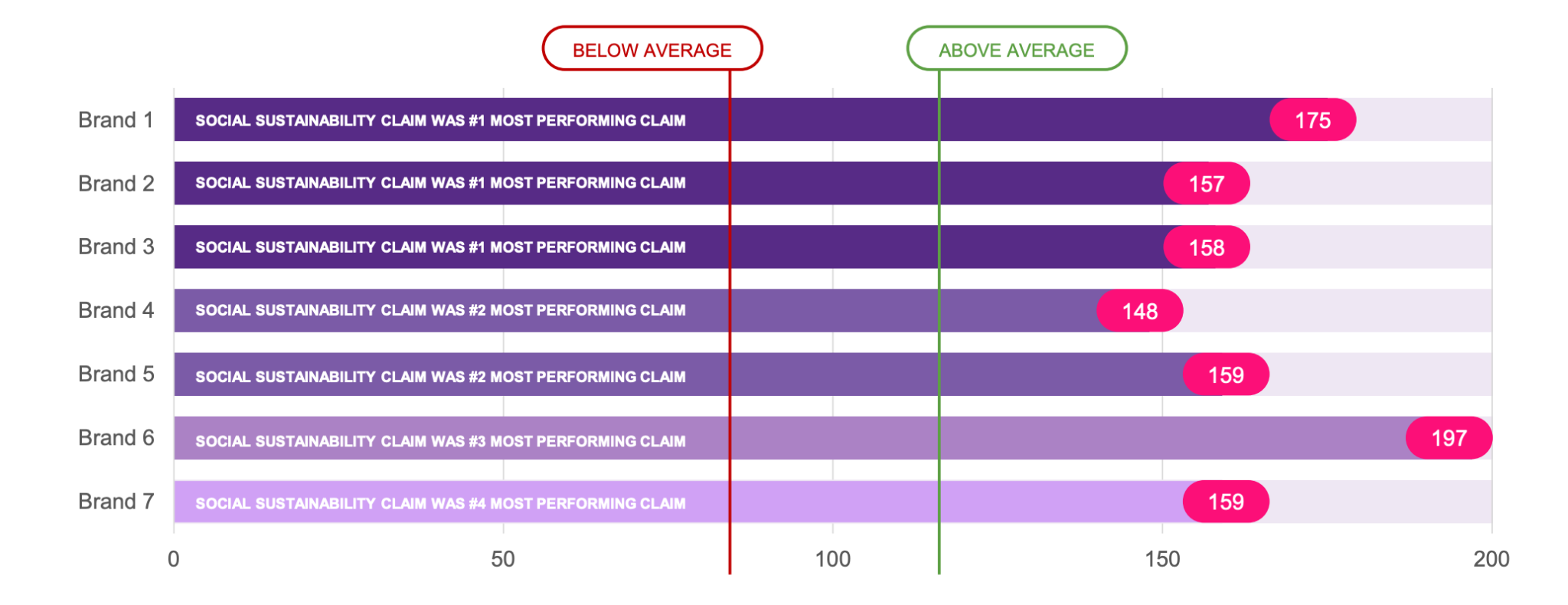
Courtesy: NYU Stern Center for Sustainable Business (CSB)
At York Container, we believe that “sustainability” goes beyond material selection. It also includes how you design, produce, and source your packaging, as well as the impact of those decisions. We use environmental, social, and governance (ESG) principles to approach these different aspects of sustainability.
- Environmental. Material use, waste, energy consumption, and emissions across your packaging process.
- Social. Worker conditions, supplier practices, and the people affected by your packaging operations.
- Governance. How you select suppliers, set sustainability policies, and track your environmental commitments.
With so much to consider from the manufacturing floor to store shelves, it’s very important to think outside the box to create functional, sustainable, and visually appealing packaging.
In this blog, you’ll learn practical ways to leverage innovative, sustainable packaging to strengthen your brand presence, reduce environmental impact, and build customer loyalty. We’ll also discuss the role of advanced technologies in streamlining sustainable packaging design and development.
What are the Benefits of Innovative Sustainable Packaging in Retail Marketing?
1. Building Customer Loyalty
Consumers are now more aware of the environmental impact of their purchases. According to industry statistics, 74% of consumers say their environmental concerns influence their purchasing decisions. Additionally, 81% of Millennials and 79% of Gen Z consumers believe businesses could and should do more to help consumers make more sustainable purchasing decisions.
Because of this, sustainable packaging has become an expectation rather than a niche preference for many consumers.
Packaging is increasingly seen as an extension of a brand's values, particularly among consumers who prioritize sustainability. In the same study from NYU, it was mentioned that consumers feel stronger connections with brands whose values align with their own, rather than just focusing on product attributes.
Your corrugated packaging can reinforce the environmental values your customers care about while helping you meet their expectations and build lasting loyalty among environmentally conscious shoppers.
2. Establishing Brand Identity
Attractive packaging does more than catch the eye. It can shape how customers perceive your product and influence their purchasing decisions. With countless products competing for attention, you need packaging that makes an immediate impact.
Working with an experienced packaging provider can help you develop custom packaging designs and even patented options that will help your products stand out. Modern printing technologies, such as precision flexo printing, can produce vibrant, high-quality graphics at scale, giving your brand the shelf presence it needs.
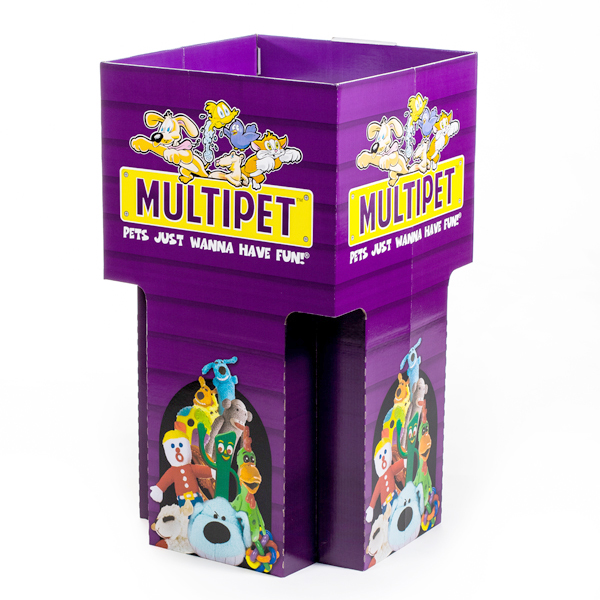
Point-of-Purchase Display Designed by York Container
Digital printing gives you more flexibility in how you use packaging as a branding tool. You can produce shorter print runs, make changes quickly, and create personalized designs with premium finishes. You can also use these capabilities for seasonal promotions and campaigns without producing more packaging than what you actually need.
3. Supporting Packaging Innovation
Competition pushes businesses to find new ways to stand out. Along with choosing sustainable materials, you also need to consider how your packaging is designed and produced.
You can leverage several production methods, including advanced gluing techniques, to reduce fiber use without sacrificing your packaging’s strength. Using less fiber can make your packaging lighter and more resource-efficient while helping you meet both sustainability and budget goals.
You also need to consider where waste occurs throughout production and delivery. A comprehensive packaging review, such as York Container’s Strategic Packaging Optimization Team (SPOT), can help you identify opportunities to use materials more efficiently, remove unnecessary steps, and improve production safety. We’ll take a closer look at this process later.
How to Address Potential Trade-offs Between Sustainable Packaging and Efficiency
When you design sustainable corrugated packaging, your first priority should be making sure the packaging does its main job: protecting and presenting your product. Once you have covered those requirements, you can explore sustainable options that meet your customers’ needs.
Well-balanced packaging often starts with finding the right combination of materials and techniques for your specific requirements. Choosing the right mix of sustainable and other packaging materials can help you maintain the strength your packaging needs while improving material efficiency.
York Container’s Strategic Packaging Optimization Team (SPOT) helps you look beyond cost-cutting when evaluating your packaging. The team works with York sales representatives to identify customized solutions that can create more value for your packaging program.
“The SPOT team spends time at client facilities to understand each customer's needs and goals. We ask questions like, “What is your ideal outcome?” In addition to reducing production costs, we also look for other ways to add value to their packaging.”
- Jennifer Ward, Director, Strategic Packaging Optimization Team, York Container Company
Through a purposeful review process, SPOT assesses whether your current packaging setup is slowing production and identifies changes that could improve your team’s productivity. The team also reviews your packaging against York’s packaging design best practices for safety, labor efficiency, and cost-effectiveness.
The review also considers where sustainability fits into your packaging decisions. When a design or material change makes sense, you may find opportunities to reduce material use and improve efficiency. SPOT helps you see the broader benefits of innovative, sustainable packaging by considering how packaging choices affect efficiency, safety, and overall design.
Are You Ready to Adopt Innovative Sustainable Packaging?
Sustainable packaging can do more for your business than reduce environmental impact. It can help you connect with customers who care about sustainability, strengthen your brand presence, and find new ways to improve your efficiency without sacrificing how your packaging performs.
If you’re searching for sustainable corrugated packaging, York Container can help you develop solutions for your requirements.
- Custom packaging design and engineering for your product and application requirements.
- State-of-the-art digital printing for high-quality graphics, shorter print runs, and customized packaging.
- Strategic Packaging Optimization Team (SPOT) to improve material use, production efficiency, safety, and cost.
- Sustainable packaging expertise backed by responsible material sourcing, recycled fiber options, and packaging designs that use materials efficiently.
- A broad supplier network through York PACK to source the materials and packaging supplies for various applications.
Partner with York Container to develop packaging around your product, brand, and production requirements.
Innovative Sustainable Packaging FAQs
Q. What are the latest innovations in sustainable corrugated packaging design?
A. Recent advances in corrugated packaging focus on using materials more efficiently while maintaining the strength and presentation your products require. Improved structural designs can reduce fiber use without compromising box performance, while digital printing supports shorter runs, personalized graphics, and targeted campaigns with less setup waste. Packaging reviews can also identify opportunities to improve material usage, production efficiency, and product protection within the same design.
Q. Is corrugated packaging a sustainable option for food products?
A. Corrugated packaging can be a sustainable option for food products, particularly for secondary and tertiary packaging such as shipping cases, shelf-ready displays, and transport cartons. Its fiber-based construction supports recycling, while efficient structural designs can reduce material use without compromising product protection. For applications that require direct food contact or specific moisture resistance, the appropriate liner, coating, or barrier treatment should be selected based on the product and distribution environment.
Q. Can corrugated packaging be sourced from multiple suppliers?
A. In most cases, corrugated packaging can be sourced from multiple qualified manufacturers, particularly when the design uses standard materials and production methods. Custom structural designs, specialized printing, or proprietary features may require specific manufacturing capabilities, so procurement teams should evaluate supplier capabilities before standardizing a design. A packaging partner should also be able to document the materials, specifications, and production requirements needed to support sourcing decisions.
Q. How does corrugated packaging perform when products require moisture, oxygen, or UV protection?
A. Corrugated packaging primarily provides structural protection rather than the high-level barrier performance associated with specialized flexible or multilayer packaging. When a product requires protection from moisture, oxygen, or UV exposure, coatings, liners, treatments, or other packaging components may be incorporated into the corrugated design. The appropriate solution depends on the product, expected storage conditions, distribution environment, and required shelf life, so barrier requirements should be established before finalizing the packaging structure.